[00:00:00] Speaker A: Foreign.
[00:00:05] Speaker B: Welcome to the CBD Ed show with Ed Chaney, a CBD industry expert and business executive.
In this program, we will discuss the uses of CBD and other methods of treatment that are alternatives would also complement conventional medicines. Now here is your host, Ed Chaney.
[00:00:22] Speaker A: Welcome listeners to the CBD Ed Show.
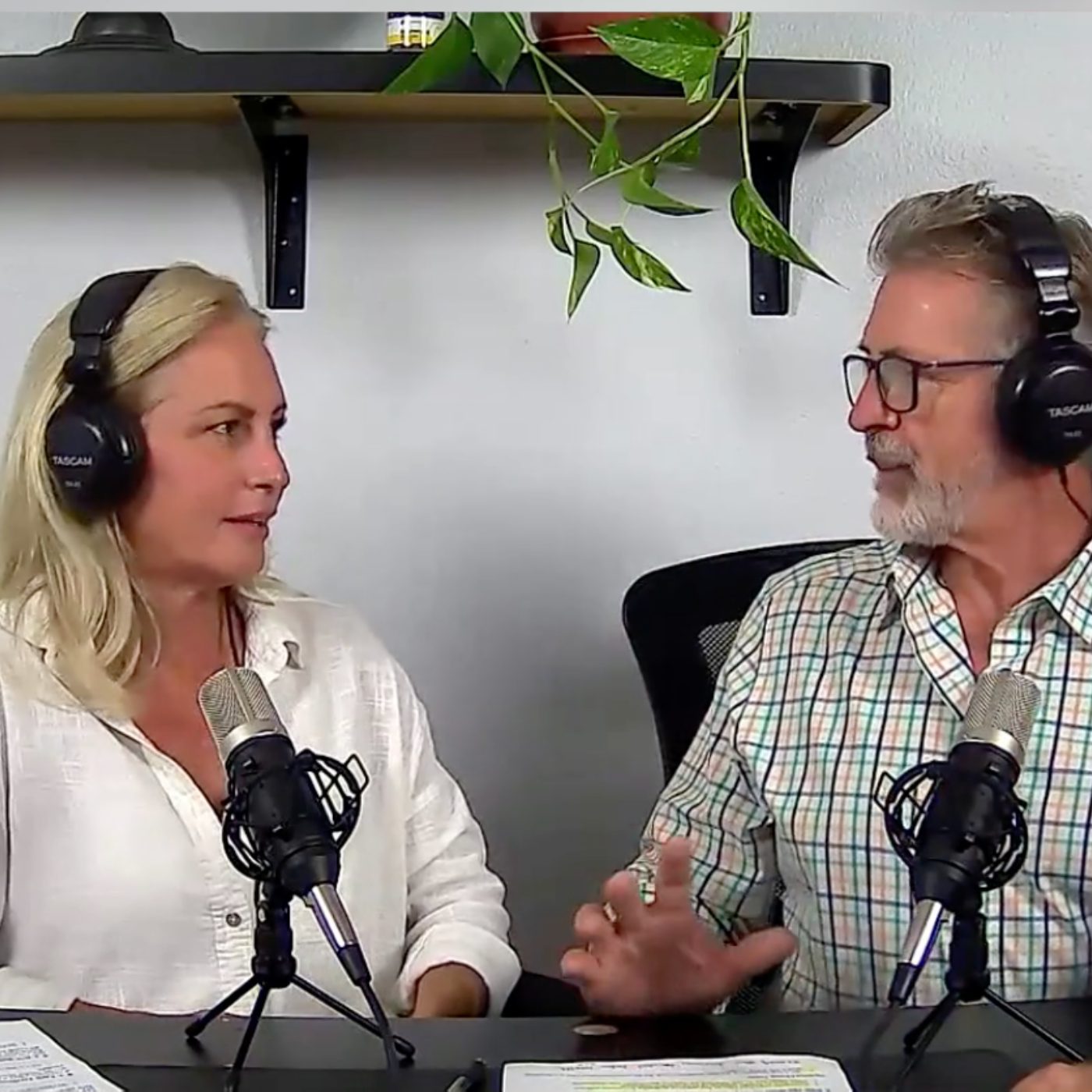
I'm your host, Ed Chaney along with the beautiful Ms. Kimberly Rose.
[00:00:31] Speaker C: Hello everyone. Thank you, Ed.
[00:00:32] Speaker A: You're welcome. You're welcome. A special guest today, Stephanie Beebe.
[00:00:37] Speaker D: Hello, Ed. And Kim.
[00:00:38] Speaker A: Helen. This is Stephanie's second time on and what that really means for us and all of our listeners is she is a great contributor to these topics.
[00:00:47] Speaker D: Oh, I thank you.
[00:00:48] Speaker A: And I think this one's pretty near and dear to your heart too.
[00:00:50] Speaker D: It is.
[00:00:51] Speaker A: All right. So this one we are going to be reviewing the therapeutic potential of the endocannabinoid system and age related diseases.
Now this is something also near and dear to both mine and Kimberly's passions as well. Maybe it's because we are now becoming that population where age is becoming a normal conversation piece.
It also means that our parents are getting there and that there is more topics of conversation around the health of our parents now. So that said, we were going to dive in this with a lot of passion. We came upon a, a study, a review and remember, we only do peer reviewed, clinically posted studies and this one was particularly well produced.
So these guys spent a lot of money putting this clinical review together. There were in total 12 doctors that were participating and creating this. It was published in October of last year. So also a very recent study and we're going to do our best to highlight this very long study for everyone.
But we promise that what we will give you is the best pieces of it.
And so we're going to do all that on the first section of today's show and on the second half, then we're going to apply it to real world. We're going to have discussions about those people that we love who are in this, this area of aging, related complications and diseases. And then we're going to move over into discussions of what we do with them when they can no longer live at home. Then they go to assisted centers and we're going to have a conversation about that too because these are the areas we've become very familiar with over the last two years.
So that's how we are going to approach this school, this show today. And again, I want to thank Kimberly Rose because she will be participating as the, as the representative to our listening audience.
[00:03:10] Speaker C: Yes, I'll Be asking those questions, hopefully that are popping into your minds because they'll be there. They're popping into mine. I read. I skimmed this review. I mean it is how many pages?
[00:03:22] Speaker A: Oh, 100.
[00:03:23] Speaker C: Yeah, it's very long and felt like.
[00:03:26] Speaker A: Thousands when I was reading it.
[00:03:28] Speaker C: It was very long. And of course, you know how we feel about these reviews. There's a lot of medical jargon in there that's very medically.
[00:03:41] Speaker A: I know. Do you know how many times I have. So when you look up the definition of a word, you have that little sound bite that you get to hear the pronunciation of that word. Oh my goodness. At least half a dozen times.
[00:03:54] Speaker C: Just. Just to be able to pronounce it today.
[00:03:57] Speaker D: Close.
[00:03:57] Speaker A: And now I gotta remember all of them. So I. It's probably gonna be a little bit of entertainment, I'm sure.
[00:04:02] Speaker C: Yes. What do we used to call a shit show?
But we'll get through it.
[00:04:07] Speaker D: Because I will.
[00:04:08] Speaker C: We'll trying to try and be as grammatically correct as we can be. I mean, we are reading a document.
[00:04:15] Speaker A: Yes. And listen, the. The other advantage we have is Stephanie then is closely related to those who are in assisted living and along with their families. So a lot of relationship building there, a lot of awareness of what both sides of that little model are dealing with, both the residents and the family members. So I think the second half of this will be just as valuable as the first half.
[00:04:45] Speaker D: Okay.
[00:04:46] Speaker A: All right, well, let's peer through this now. We got about 25 minutes or so to get through what I think are the highlights. And I'm going to start off with again, this was a peer reviewed document. This was recently published in October of last year. The abstract for this document reads as the endocannabinoid system dynamically regulates many aspects of the mammalian physiology.
ECS has gained substantial interest since growing evidence suggests that it also plays a major role in several pathophysiological conditions due to its ability to modulate various underlying mechanisms.
Now we've always talked about this, that the ECS system was really just a system of modulating items both up and or down to keep the system and what they call homeostasis, or what has been referred to as homeostasis. So there is a balance there so that that system can be. Can operate optimally.
All right, let me keep going. Furthermore, cannabinoids as components of the cannabinoid system have proven beneficial effects such as anti inflammatory, immunomodulatory, neuromodulatory, antioxidantative, cardio protective effects. Now remember what cannabinoids are? Cannabinoids are little messengers, messengers that run around and talk to other transmitters in the body. The ECS is made up of a ton of receptors and has its own cannabinoids. And it just so happens that the hemp plant also has abundance of cannabinoids. So we can introduce those into our ECS system and they help to expand its ability to regulate.
All right.
In this comprehensive review we aim to describe the complex interactions between the endocannabinoid system and most common age related diseases such as neural degeneration, oncological, skeletal and cardiovascular disorders.
Excuse me, oncology. Talking about diseases, cancer and such, together with the potential various cannabinoids to help with the progression or the digression of these disorders. Such chronic influence, such as chronic inflammation, as it postulated as the pillar of the above mentioned medical condition, saying that chronic inflammation really is one of the main components of most age related problems. And you'll see that as we talk further into this review.
Okay, let's start with.
Let's start with reading.
It is well known that cannabinoids interact mainly, but without excluding other classes, with three classes of receptors. Now I only share this little piece of information because I think it's the. It's a base of understanding how the ECS system works. There are receptors and there are transmitters. The receptors in the body fall into these three groups.
G coupled protein receptors, CB1 and CB2 receptors.
Ligand sensitive ion channels. They are known as TRPV1 and TRPV2.
And then finally we have nuclear receptors. Now I could tell you Kim and I are looking at each other going, oh, that was at it.
[00:08:34] Speaker C: Yeah.
[00:08:34] Speaker A: We were unaware of that last year. And we pay. We stay pretty up to debt, up to date on our knowledge and education about the ECS system. And that showed up.
[00:08:46] Speaker D: Yeah.
[00:08:47] Speaker A: What is that new item?
[00:08:48] Speaker C: A nuclear receptor.
[00:08:50] Speaker A: Nuclear receptor.
Peroxisome proliferators.
[00:08:54] Speaker C: Mmm, okay.
[00:08:55] Speaker A: Activated receptors.
Activated receptor gamma.
I have no other information other than that because when I stumbled on that I went, okay, that's good.
They're finding out new things, which they should for a system that's this important.
Anyway, I don't have the information you like, but I know I can get it for you.
[00:09:19] Speaker C: Well, it sounds like again, one of the ECS system is just going to be one of those ongoing things where as they do these studies and start digging, they're like, oh my gosh, wait a minute, there's. Because the ECS is only what, 10, 20 years old that we've Discovered it.
[00:09:36] Speaker A: Discovered it. Correct.
[00:09:37] Speaker C: Yeah. So they're going to just continually discover how much this actually goes through your body and regulates stuff.
[00:09:45] Speaker A: And so. And think about this. So it's fairly new.
Recently discovered, actually a little bit more in 20 years. It was in the 90s when it was discovered, so it's not even in our collegiate curriculum yet.
And right in the middle of their discovery, what happened? Oh, yeah. All right, so CBD was found in the hemp plant and there was regulatory issues and legal issues all over the place. So the ability to study one of the major components of this ECS system was constantly being blocked.
[00:10:24] Speaker D: Mm.
[00:10:25] Speaker C: Yeah.
[00:10:26] Speaker A: So I keep telling you, when it gets unblocked, this is going to be crazy.
As a matter of fact, I'll share something that is really going to blow your mind.
They are expecting an increase in the elderly by the year 2050 to be one in six individuals.
One and six individuals were. Will be over the age of 65.
[00:10:53] Speaker C: This. This. When I read. I did read that. I did read that part.
I think I read it like five times. I'm like, wait a minute, what is it? Because obviously we're just living longer.
[00:11:03] Speaker A: Yes, but.
[00:11:05] Speaker C: And that's great, but can we, we need to figure out how to live longer without these issues.
[00:11:12] Speaker A: Yes. Yes. Great.
[00:11:13] Speaker D: Yeah. That's what they, they talk about in here is that as we're living longer, more things are going to continue to happen to us and, and all this inflammation is going to continue to bring down the death rate.
[00:11:30] Speaker C: Yeah, yeah.
[00:11:30] Speaker A: Because it's the base for most of these problems.
[00:11:33] Speaker D: Yeah, yeah.
[00:11:34] Speaker C: I mean, none of us, all of us want it. We're like, okay. I mean, you know, as long as I'm up and moving around knowing, but.
[00:11:41] Speaker A: Let me, let me live until then.
[00:11:43] Speaker C: Right. I don't want to. I don't want to be put away somewhere. I don't want to have to not be able, you know, where I can't take care of myself and my kids. But if we can stop or slow down this progression that's gone over for the la. I don't even know how long it's been building because I think there's more of all of these diseases now because we are introduced to so much, so much inflammatory things.
[00:12:10] Speaker A: You'll find out there are certain toxicities that are contributing to this too. And they will continue as long as we keep modifying our foods.
Big population, oxidative stress. These are all things that are contributing to this, this problem of aging related diseases, deterioration. Yeah. So let's keep going Now, I want to talk a little bit more about these receptors. So you have an understanding of the system. The CB1 is mainly found in the central nervous system.
Okay. So dealing with neural.
CB1s are also involved in neural transmissions.
The CB2 are found in different populations of circulating immune cells and cellular elements in the spleen and thymus and are mainly involved in the immune reaction. So CB2s are the ones that you will find spread out through your body.
Okay. CB1. Very early in the day, we thought those were just your brain receptors, but it's not so much that they're just.
They're just commonly found in the brain area.
All right.
Moreover, recent evidence advocates that the CBD 2 play a pivotal role in the reduction of progression of neurodegenerative disorders such as multiple sclerosis, Alzheimer's and Parkinson's disease. Now, let's keep going. The endocannabinoids implicated in various physiological and pathological processes. Changes in the endocannabinoids concentration, as well as dysregulation in the ECs have been associated with pathological conditions, including, but not limited to, cancer, Osteoarthritis.
I'm sorry, Osteoporosis.
All right, thank you very much.
Neuromotor.
Neuromotor. Neurophysiological and neurodegenerative disease. Respiratory disease, such as asthma, Cardiovascular disease, such as stroke.
Here we go.
Atherochlerosis and myocardial infarctions, metabolic disorders, erythrocythemias and hypertension.
Now, I'll just share again.
When the ECS changes, these are. These.
These issues I just caught are affected by that.
Okay, so why. So you can see the importance of studying how the ECS modulates and what triggers it to do it and how can we manage through it, because it affects these issues, these conditions. All right, now, there is also a discussion in here and a whole section about it I was very light on.
I skim through it because you'll understand why when I read it, synthetic cannabinoids were synthesized to overcome the undesirable effects of photocannabinoids.
All right, I'm sorry. Phytocannabinoids.
[00:15:45] Speaker C: Yeah.
[00:15:45] Speaker A: Now, why would ED not want to put a whole lot of attention to that?
[00:15:51] Speaker C: Well, because obviously the synthetic is going to be more of a pharmaceutical product where a Fido is probably. It's going to be more of your basic CBD that has all of your nutrients and all your stuff from the plant there. It's not pulled out and broken down into a powder and put into A capsule or whatever.
[00:16:12] Speaker A: Yeah. So I, I have, I, I hundred, 100% believe that there will be a synergistic relationship between over the counter and pharmaceutical cannabinoids. I think the pharmaceutical will be synthetic and I think the over the counter, where you get at your local drugstore will be the hemp based products.
And I'm going to tell you why. Hemp based products will be absolutely great. They will be natural, they will be nutraceutical, they will cost you less than $1,000 a year.
And now let's move over to pharmaceutical. Sometimes there is a need to be very specific about an outcome of something like a cannabinoid. So then they can have their way with it. They can, they can concentrate on the efficacy of it, the volumes, the sheer volumes of it. They can focus in on those.
[00:17:08] Speaker D: Well, that was one of my questions when reading this, you know, because I first of all don't want to have any of these things that they're talking about.
And I'm just looking at this list of how degenerative most of them are. But is, is the hemp plant, the pharmaceuticals come in, is that sustainable.
[00:17:29] Speaker C: Or.
[00:17:29] Speaker D: Is that why we're going to have some at the same time?
[00:17:31] Speaker A: It's going to be sustainable because the people are going to make it that way. Yeah, they will. They've already stood up and said, farmer, you are not taking this, but I'm happy to share it with you. There may be a need. My mom has this and I hope you do have something stronger because the impact may not be hitting it.
So, yes, I think there's just going to be the synergistic relationship and I have a feeling the population is going to say, we like that one, we don't like that one. Take that one off the market because we're not interested.
[00:18:01] Speaker D: Right.
[00:18:02] Speaker C: Yeah.
There will be those people that really still only go to their doctor for all of their guidance and all of those things. And I've never had a doctor even discuss CBD as a prescription. There's no, there's nothing out there.
[00:18:19] Speaker D: No.
[00:18:19] Speaker C: For specific things.
I don't, I think it's going to be the next generation. That's even taught.
[00:18:25] Speaker D: Right.
[00:18:25] Speaker C: About the ECS system.
[00:18:27] Speaker D: Right?
[00:18:27] Speaker A: Yeah.
[00:18:27] Speaker C: I don't even know. Is it like you said, how long is it college?
[00:18:31] Speaker A: Yep, yep.
[00:18:32] Speaker C: Yeah.
[00:18:32] Speaker D: Or will it just stick with the holistic direction?
[00:18:36] Speaker C: Well, if pharmacy, if big pharma is going to do it, they're going to have to teach the doctors about it. They can't.
[00:18:44] Speaker A: And I had, I told you.
The last time we came together that, you know, I've spoken to some young doctors and there is a shift in the desire to go back to taking care of mankind.
[00:18:57] Speaker D: Yeah.
[00:18:58] Speaker A: Yeah.
So thank you for that. Let's say our kids are gonna do well.
[00:19:02] Speaker D: Yeah.
[00:19:03] Speaker A: So we talked about this.
One out of six individuals will be over the age of 65 in the year 2050. That was a epidemiological study. That wasn't somebody just doing some math. They needed to find out these numbers.
I also want to know. They made a couple other statements here. Neurodegenerative and cardiovascular disease, cancer, diabetes are the most common age associated disorders which significantly increase the risk of death.
At the same time, aging is one of the most significant risk factors for the aforementioned pathologies.
Growing evidence suggests that the cs, the cannabinoid system may represent a promising therapeutic approach to these disorders.
All right, so that leads us into our first.
Let's start talking about one of the hypothesis proposed by this review, telomere theory of aging. And I know we've had this conversation before. Telomeres have specialized DNA protein structures that are found at the end of all mammalian chromosomes and play a major role in covering the ends of the chromosome to reduce DNA loss during cell replication.
[00:20:30] Speaker D: Can we talk about telomeres just for a second?
[00:20:32] Speaker A: We can.
[00:20:33] Speaker D: All right. Because I don't know if people are real familiar with what a telomere.
So I have a great little visual, if I may. Telomeres. If you think of a shoe and a shoestring, as you wear your shoe and you tie it and you do your daily activities, the shoestring begins to fray. Right.
[00:20:51] Speaker A: Nice.
[00:20:52] Speaker D: And so then you have all these little pieces of a shoestring that don't work all together.
[00:20:57] Speaker A: Yeah.
[00:20:58] Speaker D: So it's the same thing. When you look at a chromosome in your DNA, the chromosomes are at the end of the DNA. As we begin to age, things just begin to happen and our cells begin to divide. Different things begin to. And that's when bad things begin.
[00:21:12] Speaker A: You know what that was? Well, that was. That was perfect. That was a great example of how to demonstrate a telomere.
[00:21:19] Speaker D: Yeah.
[00:21:19] Speaker A: All right.
[00:21:20] Speaker C: Thank you.
[00:21:20] Speaker D: You're welcome.
[00:21:22] Speaker A: So the telomere length decreased with an age somatic cell leading it thus to the loss of cells ability to divide.
[00:21:33] Speaker D: Yeah. You can't bring it back together.
[00:21:35] Speaker A: Nope.
[00:21:36] Speaker D: You just have to, if you can, you prevent it from fraying any further.
[00:21:40] Speaker A: Right?
[00:21:41] Speaker C: Yeah.
[00:21:42] Speaker A: So it's interesting that the length of the telomere, the telomeres may be considered as A key biomarker. And hear this. Of the onset of senescence.
Senescence, Sorry, senescence.
[00:22:00] Speaker C: And what is senescence?
[00:22:02] Speaker A: Senescence is an accumulation cells that lead to degradation.
So the more of these senescence cells that are in an area, the less functioning that system is going to have.
[00:22:23] Speaker C: Okay, okay.
[00:22:24] Speaker A: Let me read a little bit further.
Recent studies have shown that senescent cells may also induce a progressive functional deterioration in the tissues in which they accumulate, contributing thus to the development of several age related pathologies such as osteoarthritis, fibrosis, Alzheimer's disease, pancreatitis, pancreatitis, metabolic disorders and.
All right, here we go. Atherosclerosis. I think I tried to say that earlier.
[00:23:02] Speaker D: Good job.
[00:23:04] Speaker A: Okay, now. And they suggest that cellular senescence can be triggered by higher levels of reactive oxygen, which is oxidative stress. Toxins from pollution, alcohol, stuff like that. Some of our food that is altered.
These things can lead to higher levels of cellular senescence.
Okay, all right. Taken together, telomere shortening and the cellular senescence, senescence and oxidative stress may represent the main mechanisms responsible for the development of age related diseases. Moreover, all these mechanisms are also capable of inducing various functional alterations of the immune system which further promotes and maintains a prolonged status of chronic inflammation that aggravates the progression of age associated disease.
Okay, so in summary, this getting to a place where prolonged status of inflammation is right there feeding age related diseases.
Alright, so let's go to chronic inflammation next.
Alright.
Recent evidence indicates that the ECs may play a pivotal role in age related disease such as neuro degenerative inflammatory immune related diseases including neoplasia and cardiovascular disorders.
I am reading by the way, not making. I'm just reading on.
Ongoing studies are focusing on the hypothesis that cannabinoids may improve the pathophysiological mechanisms associated with inflammation and immune system dysfunctions.
Okay, if we stop right there, we're just saying that the ECS is key to stopping some of this immune dysfunctions and inflammation. Alright.
Chronic inflammation and subsequent alterations of the immune system that occur with advanced aging.
Although many features of the immunosenescence may be considered harmful, there's also adaptive or remodeling characteristics which are also necessary to ensure survival and longevity as long as they are kept within normal limits.
So you may find that reading that senescence is not always bad.
[00:25:52] Speaker C: Okay, okay.
[00:25:53] Speaker A: Sometimes it's a needed piece for longevity as long as it's kept within normal limits.
All right. And aging involves non specific state of chronic inflammation as a particular Condition that is usually characterized by increased levels of multiple inflammatory biomarkers.
Now experimental studies have shown that cannabinoids may have an anti inflammatory effect since their administration in various age related disease led to positive outcomes in various subpopulations of inflammatory cells.
Now when we go into the second half, you know, we all three of us can probably share our own experiences.
[00:26:43] Speaker D: Absolutely.
[00:26:43] Speaker A: With an anti inflammatory effects of cannabinoids.
That being said, let's keep going.
Yep, there we go. All right, so let's talk about.
It is clear now that pro inflammatory state is a hallmark of aging the elderly population located in locate. I'm sorry. The elderly population is characterized by an inability to develop a proper anti inflammatory response to various exogenous and endogenous aggressors due to a particular state of the immuno sentences.
Okay.
[00:27:27] Speaker D: The word of the day.
[00:27:28] Speaker C: Yes it is.
[00:27:29] Speaker A: And it comes up a lot.
[00:27:31] Speaker C: Yeah.
[00:27:32] Speaker A: Although CBD demonstrates immuno support.
I'm sorry. It demonstrated immunosuppressive and immunomodulatory effects and some experimental studies. There are still controversies among authors regarding the ability of this cannabinoid to reduce the pro inflammatory status.
So that is I think them saying more, more studies need to be had.
Now there is a lot of interplay between cannabinoid system and age related disease. I'm going to go over that as more of a highlight for you today.
Let's see. We go to see relief of.
I'm just going to do this in a much more brief because we want to take a break here real soon.
[00:28:25] Speaker C: Wasn't there Alzheimer's disease in there in that area?
[00:28:28] Speaker A: Yes. The growing interest in cannabinoids as a promising neuroprotective therapy and Alzheimer's is based on their ability to decrease neuroinflammation through the activation of CB1 and CB2 receptors, also promoting brain repair mechanisms.
[00:28:47] Speaker C: I liked that paragraph.
[00:28:49] Speaker D: Sorry.
[00:28:50] Speaker A: I'm glad it surfaced then.
[00:28:51] Speaker C: Yeah. I think, I think that I took away from this article that inflammation really was the key. The key. And if you can keep it down, you're minimizing your risks.
[00:29:08] Speaker D: I've tried to look at what has happened over the generations and why are we in the state that we are now. So many more people are experiencing all of these situations and what has changed? Obviously Ed mentioned our food, the environment, so on. But the effects of inflammation. How many people complain about inflammation?
I know my rheumatoid doctors. You, you can't even get into them. They're fully booked. They don't want to work as much as they are.
[00:29:34] Speaker A: Yeah.
[00:29:35] Speaker D: And. And so, yeah, it's got to be the root cause.
[00:29:38] Speaker A: All right, well let me go two more. Two more and then we can say that's it for now. And then we'll go. We'll go into our break and then come back and give some real world. All right, that's the endocannabinoid system and age related musculoskeletal changes.
Aging is a physiological process associated with changes in bone density, decreased muscle mass and function and joint degradation. Whereas a various risk factors and pathological mechanisms have been identified and described with respect to aging related musculoskeletal changes. The potential role of the endocannabinoid signaling is yet to be fully understand.
Nevertheless, recent studies highlighted the active involvement of the ECS and bone metabolism, sacropenia and degenerative joint disease. Okay, I want that to come across as promising.
Another one would be cardiovascular aging and cannabinoid system.
Cardiovascular disease represents the leading cause of mortality globally. Within the recent epidemiological studies showing an increased trend of prevalence and incidence since the next decade is estimated that one fifth of the world's population will be over 65. And given that the aging has the greatest impact on cardiovascular homeostasis, it is a certainty that the global burden of cardiovascular disease will increase. Thus emerging non pharmacological and pharmacological therapies are mandatory to reduce this burden.
And again stated that both over the counter and pharmaceutical should come together.
They should be working synergistically. So there is growing evidence that the ECS may play an important role in the modulation of cardiovascular parameters such as blood pressure, vasomotor tones, cardiac, cardiac contractility, vascular information and angenogenesis.
[00:31:49] Speaker D: We asked for forgiveness early on.
[00:31:50] Speaker A: Thank you very much.
[00:31:51] Speaker D: Yes, we did.
[00:31:52] Speaker C: And if you got all those words, bless you.
[00:31:55] Speaker A: All right, so listen, there's a lot of promising evidence that still need to be looked into. But lead to the ECS has a lot to do with the onset of aging related issues.
[00:32:13] Speaker C: Yes. And now we have found out that CBD can help because you do have cannabinoids already in your body.
You start out as a baby.
Most babies start out in a full on homeostasis state. A healthy baby that has not been traumatized in the womb in any way.
So you start there, but it's got to be that throughout life. Right. You don't produce enough. Or the ECS system just needs so much more help because of all of our environmental struggles.
[00:32:52] Speaker A: Yeah, absolutely. And there's so many contributing pieces here. There really is. Well, let's do this. Let's take a quick break and when we come back, let's share what we've learned in the real world.
So we'll take what we've learned from reading through this study and make do some dot connecting.
[00:33:12] Speaker C: Okay?
[00:33:13] Speaker A: All right. So we will be right back.
[00:33:23] Speaker E: Want to see what Voice America is up to behind the scenes?
Follow us on TikTok talk @Voice America Talk Radio live.
[00:33:36] Speaker F: Authentically heal naturally with Canafil. We have three unique blends for pain relief, reducing stress and promoting healthy sleep. Visit canafil.com for the convenience of online shopping that includes free shipping. Or if you're in Arizona, stop by our store in Phoenix for personal consultation and product selection. Our friendly staff is here to help you. All of our products have full third party testing and a seven day satisfaction guarantee. Call 48059 or visit cannafil.com cannafil giving you your life back.
[00:34:11] Speaker E: Sports continues to grow and evolve to ever increasing prominence in today's society. On All Around Sports, host John Inglesby will connect with the leading newsmakers from the sports world, including players, owners and fellow sports journalists discussing the top news and events that are relevant to sports today. John will also report from and offer his experience experience of the world's top sports events. Tune in to all around sports with John Inglesby. Mondays at noon Eastern Time, 9:00am Pacific on the Voice America variety channel, the.
[00:34:43] Speaker A: Internet's number one talk station. Number one talk station, voiceamerica.com.
[00:34:57] Speaker B: You are tuned in to the CBD Ed Show. If you have a question that you'd like addressed on a future episode of our program, please send an email to info@the CBD ED Show.com that's info@the CBD SH.com now back to the CBD ED Show.
[00:35:16] Speaker A: Welcome back listeners to the CBD ED show here with lovely Kimberly and lovely Stephanie.
[00:35:23] Speaker C: Thank you, Ed.
[00:35:23] Speaker A: All right.
[00:35:24] Speaker C: That so that was quite the mouthful that we just had. Mouthful earful. Everything's full here.
[00:35:31] Speaker D: I'm a little brain fatigued right now.
[00:35:34] Speaker A: And just think, just think. I only skim the surface.
[00:35:37] Speaker D: Yeah.
[00:35:37] Speaker A: Oh my goodness. Hey, if anybody wants this, please send send a request to infohecbdho.org do it.
[00:35:52] Speaker C: Yeah.
[00:35:52] Speaker A: Or you know what, send it to infocannaful.com infoannaful.com either one. Send it and we'll make sure you get the information you're looking for.
[00:36:03] Speaker D: Yeah, I was speaking to a gentleman right before I left today and he's dealing with Something with his wife. I'm like, I have an article I need to send to you.
[00:36:10] Speaker A: Yeah. Hey, you know, when we get these things that are posted on platforms that have requirements, peer review requirements, you have to pay a ton of money to do it to their specifications. It's one of those that you can read and feel comfortable.
[00:36:26] Speaker D: Right.
[00:36:26] Speaker A: That at least this is coming from a science back, medical, clinical environment.
So, yeah, I really hope they enjoy the fact that they got access to that. Nobody knows how to ask for these things. It's taken me years to figure out how to get to this stuff.
[00:36:43] Speaker C: Yeah. Because most of the stuff that you Google online, you just get a blog, which sometimes if you're really lucky, they'll have a link to the review they're discussing, which is fabulous.
But a lot of times, no.
[00:36:58] Speaker D: Well, a lot of times it's just the same information over and over again, fits your profile and what you've already been searching for. So this, this was just very informative.
[00:37:07] Speaker C: Yeah, yeah. And we probably have, like I told Ed and Stephanie, we have a couple more shows just on this because there's a whole section on cancer, right?
[00:37:17] Speaker A: Yep. So let's move into, hey, what is our own personal experiences. So how are, how are we seeing our parents to deal with this age related degradation?
[00:37:32] Speaker C: Yeah, well, I mean, I've been fairly lucky in that my parents are not too much into those areas where the brain is showing signs of deterioration.
[00:37:47] Speaker A: How afraid are they that it's coming?
[00:37:51] Speaker C: Sure. I mean, how can you not?
I'm 61 and I'm reading this going, oh my gosh, how can I stop this? Is there way to stop it or prevent or whatever? I know I've been on CBD for about five or six years, but is it, is it something you can prevent or is it something that's going to happen? You just can lessen things?
[00:38:16] Speaker A: Well, I think the current evidence suggests. And that was a great question. I think current evidence suggests if you are using these cannabinoids, then you're in a better state of, of homeostasis. Thank you very much.
All those big words came in the brain. A few of them had to leave. All right, so you were in a better state of homeostasis, means your system was much more capable according to the studies.
[00:38:46] Speaker C: Right. Because as we know, right, you have your CBD in there. It's helping keep everything calm.
[00:38:53] Speaker A: So your ecm, it's helping the ECS modulate itself.
[00:38:58] Speaker C: Right?
[00:38:59] Speaker A: That's it. It does not calm you. It's not a sedative. It's nothing. Now, an effect could be calming because you're in a state of homeostasis. Maybe neurologically your homeostasis was in your brain, and now you feel you're not so stressed out.
But it does not calm. It simply assist in the transmission to receptors so that modulation can happen, regulating a system that needs to be in balance so that it can be very effective.
[00:39:28] Speaker C: Right. So it can put out or help with other things that might be going off that are a little more serious.
[00:39:33] Speaker A: Neurological degeneration. All those. You bet. You bet. Great. Great way to present that question. That was perfect.
[00:39:41] Speaker C: Okay, well, then to try and talk to an elderly person about CBD and how it benefits, would you say it's helping you?
I always tell my customers it's helping you in so many ways you don't recognize. You're not gonna feel.
Everybody's looking to feel something.
And who taught him that?
[00:40:06] Speaker D: Right.
[00:40:07] Speaker A: Yes. Anyway, so. Okay, okay. So I would gather from Kimberly's response that both her as they. As the child and the parents themselves, both of them are fearing the onset of something that they can't control.
I think I spoke to a couple of gentlemen just the other day, and I could hear their concerns of degeneration coming. And they don't know what it's going to be like. They just know it's going to scare the crap out of them.
[00:40:44] Speaker D: Now, were they older themselves or were they children who are worried about their parents?
[00:40:49] Speaker A: Right. Great question, though. They were the ones that were approaching that age.
[00:40:53] Speaker D: Okay.
[00:40:54] Speaker A: Yep.
[00:40:54] Speaker D: Yep. I find that the. The sandwich generation. Have you heard that term?
So that's. The sandwich generation is for people our age who are still taking care of children, but also taking care of their parents.
So our new term that the sandwich gener are the ones probably a little bit more worried than the parents because they see the degeneration happening and they're thinking, I'm taking care of kids. How am I going to take care of my parents? We're all having to think of financial space, location, you know, all these things come into play where not quite as many parents that I'm running across are worried about it as much. And maybe because they're either already there and they're already in that situation, or they feel that they're perfectly fine even though their children are seeing differences.
I run across that a lot.
[00:41:51] Speaker A: Oh, I bet.
[00:41:52] Speaker D: Oh, yes. Yes.
I want.
[00:41:54] Speaker A: Awareness is bliss.
[00:41:56] Speaker D: Awareness is a little interesting out there. And there are several people that I have come across as. I don't have a problem. I'm Fine.
But other people see it and they worry about it.
[00:42:09] Speaker A: Can we talk through two experiences? And I've already had a conversation with both of you on this.
So, Stephanie, you and I had a conversation with somebody, I think it was last week, whose father is in a pretty aggressive stage of Alzheimer's. Kimberly, I remember having a conversation with you. You had a patient, and the patient was actually the daughter of somebody who had Alzheimer's.
[00:42:35] Speaker C: Right.
[00:42:36] Speaker A: Okay. Who would like to share first?
[00:42:38] Speaker C: Well, mine is a customer base. I mean, their parent is in a home. And they really had to not fight, not fight for CBD to go in and go to the parent and see if they could. It would help. But it was very strictly regulated. Like, they had to follow exactly these.
These parameters.
And she's. She said, it's working. It's working really well. I mean, the. The parent is calmer in the evening. There's not such a struggle with everything. There was quite a struggle. He was not a happy camper. And so she was able to get him some gummies and some capsules and get him going and get him on his way for just a better outcome.
[00:43:28] Speaker A: What was her big. So when she would come in and talk to you, what was her big issues?
What was. What were the biggest concerns when she would walk up to you?
[00:43:38] Speaker C: Well, she wanted to know because she. She said she uses cbd.
So she said I just had to get. I have to just get it into the facility with an A. Okay. Okay. So I can't. You do. I don't want to do an oil. Because he's not familiar with that situation, and he's probably going to argue about. About that doing that. Is this going to be too much of a bother? So that'. We did a gummy and a capsule, which he was familiar with.
And then she took the CBD to the doctor that is running the facility. He said, those are fine. Then she was able to introduce it to the father.
[00:44:20] Speaker A: Perfect. Perfect. Thank you for sharing. Stephanie, what is your share?
[00:44:25] Speaker D: Yeah, I've been talking to quite a few children, the sandwich generation, about their parents and reaching out to different friends and family and this particular situation you are talking about. He's concerned about his uncle, and he's like, what can we do to help my uncle? He means everything to me. But he's watching his uncle decline and he's watching him drink more, which is interesting because I had another conversation with someone else earlier today. They're drinking more.
They're hiding the drinking as well.
So, yeah, bring in inflammation. Right now, we're just bringing in more of that. But he, he's, he's noticing his uncle just change immediately within his state because of his frustration.
And he wants to do anything he can to help him because he wants him to be the same man that helped him grow and become a good man. Yeah, he was a Navy SEAL and now he's just watching him just fall apart.
So very, very, very sad. But I'm, I'm, you know, there's solutions and that's the great thing. And what I'm encountering is so many of the family members, the children are open to solutions.
It is a little bit harder to get into the assisted livings and the memory cares, but now they're becoming more open as well because the families are demanding it.
They're noticing one by one, this child is asking for it.
They're getting the okay from the doctors, they're hearing from different people. So it's becoming much more prevalent, definitely in the caregiving homes and the support groups for the caregivers are very interested in this. And they're seeing so many different stories of the caregivers receiving the support that they need in order to take care of it. One of the biggest problem, the gentleman I was speaking with earlier, he's like, if you look at my wife who got an onset very early 54, she's now 60, and she, she's very, very far into it. If you look at her and her picture, she looks great.
You know, she looks like someone that we've all hung out with and will continue to, but if you spend dinner with us, you'll know she's not there. It's not the same person whatsoever. So he's extremely interested and very open to doing anything he can for her, but also for himself.
[00:46:52] Speaker A: Let's, so let's put this in another perspective. I'm sorry, a perspective that's exactly the way you two were talking. But let's add a little bit to it.
[00:47:02] Speaker D: Sure.
[00:47:03] Speaker A: So I've also watched a few people who went through this as a sibling and watched their parent or parents go to that state where the neural degeneration has led to stage one of Alzheimer's and the care, concern and nurturing behaviors and the worrying, I got a chance to watch, and I think you have too.
So now that we're in the mind of that person, whether that be the son or the daughter or a combination, how worried and concerned they are as this progresses, and they are in an assisted living home where the interactions is also now controlled by somebody else too.
[00:47:48] Speaker D: Right.
[00:47:48] Speaker A: So the ability to do stuff. Now your hands might be tied a little bit. Now add to that, they're self medicating, whether that be with alcohol or whether that be with thc. I'm seeing an uptick in both of those.
[00:48:02] Speaker D: Both of them, yes.
[00:48:03] Speaker A: Because they do want to escape.
[00:48:05] Speaker D: Yep, yep.
[00:48:07] Speaker A: So now you have them escaping. Your hands are a little tied. You're still worried more than ever. Now what does one do?
Where is the path?
[00:48:18] Speaker D: Right. And most of these families are having to give up their careers and occupations just to take care of them.
[00:48:24] Speaker A: I have seen that.
[00:48:25] Speaker D: But then of course, the care, the medication and everything else adds a huge financial burden.
So it's.
[00:48:32] Speaker A: Yeah, it's rough. It's very, very rough. I can tell you that there is a light at the end of the tunnel.
This, these studies, and they are all going on now as we speak in great abundance, are still being limited by all the regulatory status because the hemp plant and the marijuana plant are in the same family of cannabis. So as soon as that gets separated, I've always said things will move along at a much faster pace, but they are moving. And that's the light at the tunnel. I see. Because the impact of the ECS system as demonstrated by this clinical study is evident.
It's not theoretical, it's there.
It's just how.
[00:49:19] Speaker D: The great thing about that and with the children that I'm speaking to is they're open, but they also see a light in the tunnel. When we talk about this.
So it's not just, oh yeah, let me give this a try. Let me see what happens. It's. Oh, thank you, thank you. We have some options, we have some solutions. Yes. Let's move forward.
[00:49:39] Speaker A: And these solutions don't sound like the solutions when you are considering different types of pharmaceuticals. Oh yeah, well, we don't want to lose bladder control. That's not. Oh no.
[00:49:50] Speaker D: All the warnings.
[00:49:52] Speaker C: Yeah. The side effects, carcinogenic.
[00:49:54] Speaker A: I don't want to do that one either. Oh, it's blood pressure. Right. So at least this one's nutraceutical.
Okay. Please. Yeah. Let's try this. We just have to get permission.
[00:50:04] Speaker D: Yeah. And it's known people know about it, but not everyone really quite understands it. But it still leaves that window so wide open.
[00:50:12] Speaker A: Yeah. Well, I'm glad you're out there helping.
[00:50:16] Speaker D: It's one person at a time.
[00:50:18] Speaker A: Yeah.
[00:50:19] Speaker C: It's all you can do. Right? It's all, I mean, we, we, we can try and get into facilities, but again, and I've done a few events at those facilities. But everybody's just. Their. Their hands are tied now. That was years ago. I'm hoping it's more open now. It's a little more open now because CBD is right in the middle there. It's not going to be psychoactive, so you don't have to worry about, you know, the THC part of it. It's not. There's no it, no alcohol, obviously. It can actually kind of give you a little bit of a relief from that wanting alcohol, and it will calm them down and hopefully make them feel a little better, you know.
[00:51:05] Speaker A: Do you feel that the assistant living.
Are they coming to this?
[00:51:08] Speaker D: I feel that way. Well, first of all, the THC has gotten its way into these centers as well. And so there's different situations with that because they don't allow smoking. So if they catch someone smoking on the premises, that goes against their rules.
So there's a lot of things on that perspective where when we talk to them about CBD and no psychoactives, they're definitely in a situation of. Okay, let's discuss this a little bit more. Families are asking for it.
We need help.
We need a lot of help. So if you can come in and assist us and our nurses, caregivers and the family members. Let's take a look at this.
[00:51:47] Speaker A: Why would the caregivers need help?
[00:51:49] Speaker D: Well, just the everyday. You don't know what's going to happen. I mean, they're patterned a lot of. In Alzheimer's and dementia, they're patterned, but you still don't know exactly what's going to happen and how bad.
[00:52:00] Speaker A: Well, you have sundown.
[00:52:02] Speaker D: Yeah.
[00:52:02] Speaker A: Or. Yeah. So that is usually a state of.
Of anxiety.
[00:52:08] Speaker D: Right.
[00:52:09] Speaker A: And so if your caregiver has a treatment plan and it happens to fall in the evening time.
[00:52:14] Speaker D: Right.
[00:52:15] Speaker A: And it's important to deliver that.
[00:52:17] Speaker D: Yeah.
[00:52:17] Speaker A: Well, it could be a wrestling match or so.
So looking from their perspective is another angle that's not often considered is how do we. How do we. We provide treatment sometimes to the aging who are having issues like sundowning.
[00:52:33] Speaker D: Yeah. And in my opinion, this is such a, you know, it's such a horrible situation. But also there's light at the. In the tunnel where it's such an easy solution, especially for the caregivers to have a solution and a relief that happens pretty quickly when they know. And especially if their patient is a little patterned. They know. Times agreement.
[00:52:56] Speaker A: All right, now listen, I want to. We gotta close on this topic. I do want those who have heard Stephanie speak today, if she if you need to reach out to her, she is probably the person with the best and clearest way to an alternative path as I've ever seen. So if you would like to speak with her, Stephanie, what is a good way to reach out to you?
[00:53:19] Speaker D: Well, thank you. I appreciate that. Why don't we go ahead and do an email?
[00:53:25] Speaker A: Yeah.
[00:53:29] Speaker D: Okay. Stephanie. Www.stephanie bb which is the two letters, S, T, E, P, H, A, N I, e b b. Cannafil c a, n, n a, f, y,
[email protected].
[00:53:41] Speaker A: Yep.
And if for any reason you guys know, you can always reach out to
[email protected] will we be happy to direct you over to Stephen, Stephanie, and those incidences, too, because again, I think this struggle is big.
[00:53:56] Speaker D: Yeah.
[00:53:57] Speaker A: And until it clears up, it's going to stay vague.
And we would like to help, as usual.
[00:54:02] Speaker C: Yeah. Because you got to know, like little specific words when you're talking to a facility for your parents. And you kind of have to be a little not forceful, but you have to, you know, say what you need to say.
[00:54:15] Speaker D: Yeah.
[00:54:15] Speaker A: Okay.
[00:54:16] Speaker D: Can I do one quick little plug? Because we do have, we just did Alzheimer's month during the month of September. And the walk to to end it is coming up. So pay attention to your friends if they ask.
[00:54:26] Speaker A: Oh, beautiful. And thank you very much. Okay, guys, that is all the time we have today. Thank you very much for listening. We love everyone and we want you to stay tuned. We will always do our best to deliver good clinical data to you guys. All right, this is Ed and this is Kim saying bye for now.
[00:54:43] Speaker C: Bye, everybody.
[00:54:48] Speaker B: Thank you for listening to the CBD Ed Show. Please join your host, Ed Chaney for another edition next Friday at 11am Pacific Time, 2pm Eastern on the Voice America variety channel. We can also be heard each week on the Voice America Health and Wellness Channel. Until we talk again. Enjoy the upcoming weekend and we'll be back with you soon.
[00:55:23] Speaker A: Sam.